




Radiopharmaceuticals: New Targets, More Personalized Therapy and a Strained Supply Chain
Radiopharmaceuticals: New Targets, More Personalized Therapy and a Strained Supply Chain
Summary of an interview with Prof. Wolfgang Wadsak at EANM 2026, Vienna
The field of nuclear medicine is undergoing a rapid transformation, blending cutting-edge radiochemistry with highly personalized patient care. In a recent interview to AuntMinnieEurope, Prof. Wolfgang Wadsak, medicinal radiochemist, chair of the EANM's Guideline and Publication Council, and co-founder of the Austrian outpatient nuclear medicine clinic MINUTEmedical, shared his insights into the current breakthroughs, the complex science of molecule design, and what the future holds for cancer therapy.
Promising Advances in Development
The radiopharmaceutical landscape is experiencing vibrant development, focused both on discovering new targets and improving the established gold standard for prostate cancer, i.e. PSMA. An exciting new target ACP3 promises to overcome the limitations of PSMA-negative lesions. Like PSMA, this enzyme is highly prevalent in prostate cancer but also shows high density in the PSMA-negative lesions.
What Makes a Molecule Promising?
Designing a successful molecule is rarely straightforward; it is a meticulous path blending previous scientific work, a lot of trial-and-error in the lab and a bit of luck. The process begins by defining the molecule’s core purpose:
- Diagnostic Application: Requires a fast pharmacokinetic profile, meaning how the drug moves through the body. The substance must reach the cancer cells quickly and clear out rapidly to create a sharp, high-contrast scan while keeping patient radiation exposure to a minimum.
- Therapeutic Application: Demands a slower, long-lasting profile. The molecule needs to bind tightly and stay at the tumor site for an extended period, allowing the radiation to unfold its effect.
- The ultimate hurdle is designing a single molecule that can master both – the definition of a true theranostic agent.
A molecule's pharmacodynamics also dictates its clinical success:
- Affinity: How strongly the ligand binds to its intended target.
- Selectivity: Whether it binds exclusively to that target or latches onto similar structures elsewhere in the body. For example, salivary glands naturally express PSMA, making dry mouth (xerostomia) the most common side effect of PSMA radioligand therapy. The challenge multiplies in brain imaging, where the serotonergic system contains more than 20 receptor subtypes, and a tracer must accurately isolate and visualize only one.
The Reality Check: Scale, Price, and Sovereign Supply
A molecule can possess flawless physical properties, but it must also be available at scale and at a reasonable price. Producing the targeting ligands is a long, demanding process, though it is increasingly manageable within both university and private commercial settings.
The bottleneck lies in sourcing the radionuclides. The specialized research reactors required to produce these medical isotopes are few and far between, and many are aging. Navigating the long, tedious decision-making processes to modernize old reactors or build new ones spans both national and EU levels. Ensuring Europe achieves self-sufficiency is vital, so that the continent does not rely solely on a few dominant players abroad.
Innovation in Practice: Personalized Care at MINUTEmedical
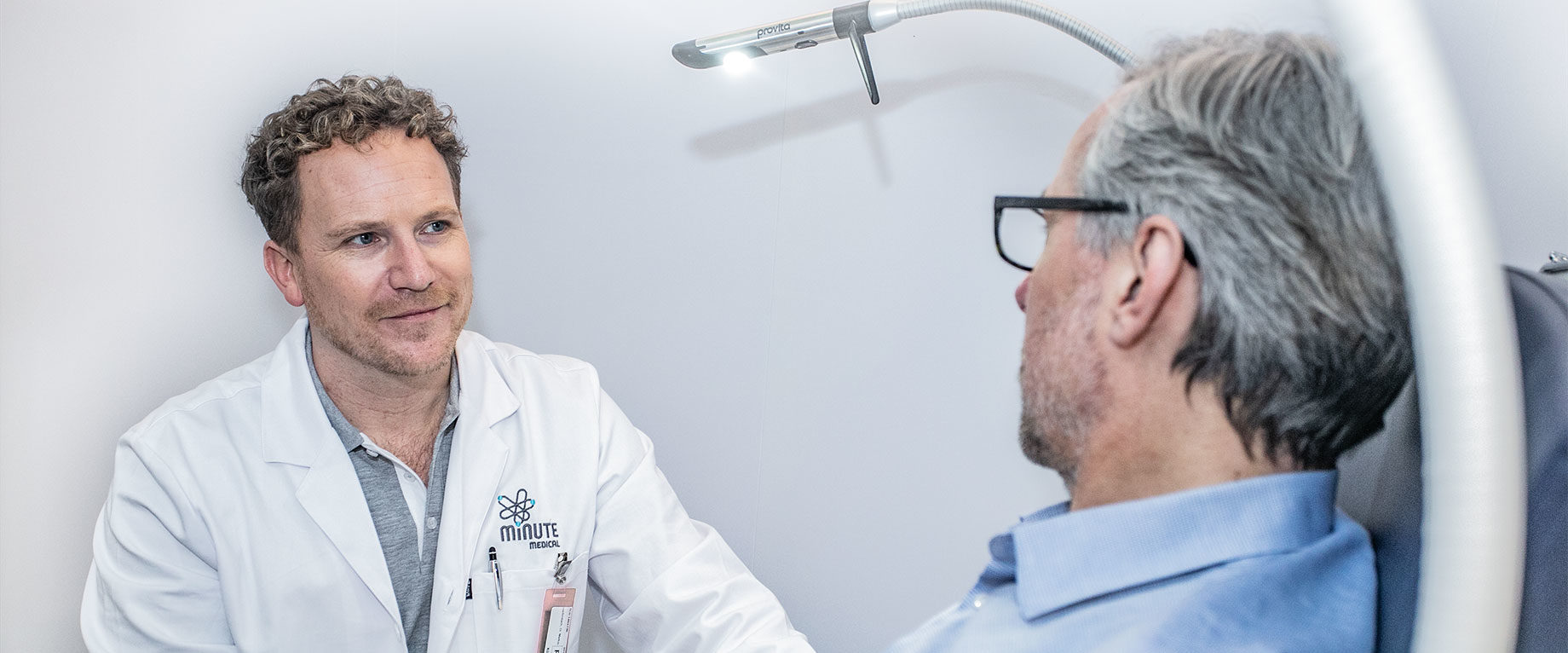
Prof. Wadsak co-founded MINUTEmedical, an outpatient nuclear medicine clinic with its own dedicated radiopharmaceutical manufacturing facility in Austria under his supervision. Favorable legislation in Austria in the field of nuclear medicine has enabled this rather unique model. Radioligands are prepared on demand specifically for each patient. This allows to tailor the type, timing, and dosage of the radiopharmaceutical to the individual's exact clinical needs.
The Future of PSMA Therapy: Earlier Use and Personalization
Looking ahead, a new generation of PSMA-targeted radiopharmaceuticals is already advancing through Phase III clinical trials. But Prof. Wadsak believes that the true future of prostate cancer treatment lies in radionuclide mixing and earlier intervention:
- Tailored mix: nuclear medicine physicians will utilize a diverse arsenal of radionuclides mixed to fit a patient's personal disease profile. The ideal regimen will change over the course of the illness, dictated by how much bone or soft tissue is affected, the overall tumor volume, and the developed resistance to previous therapies.
- Earlier application: Moving the therapy up the disease timeline will allow a much larger patient group to benefit from this highly effective treatment that enhances quality of life rapidly and without severe side effects. Recent studies, such as PSMAfore, have already led to market authorizations in the US and Switzerland. The upcoming PSMAddition trial aims to push this therapy even earlier into the disease course.
The One Wish
If a single scientific breakthrough could be granted tomorrow, the ultimate goal for Prof. Wadsak would be replicating the exact success of PSMA for other widespread, devastating cancer types. Finding a similarly "perfect" target for hard-to-treat diseases, such as triple-negative breast cancer, ovarian cancer, or lung cancer, would extend the life-saving reach of targeted radiopharmaceuticals to millions more patients worldwide.
You can watch the full interview here.

